Plane Project Management: Omitsis Edition
Twenty-seven features built on top of Plane, the open-source edition, to replace Jira: hours and time-tracking reports, a service desk with SLAs, a Jira importer, automations and roles. No per-seat licences.
Omitsis ran its work on Jira. It did the job, but the bill grew with every person who joined, and the parts we actually needed — time tracking, time reports, a support desk — were exactly the ones sitting behind a higher tier or a paid add-on.
The way out was to take Plane, an open-source project management tool (Community Edition, AGPL-3.0), deploy it on our own servers and build what was missing on top of it. This is not an install with a few tweaks: it is twenty-seven new features, eighteen backend modules of our own, and an importer that carried the whole Jira history across.
What makes the sums work is not only that the base is free software: it is that the development was done with AI. Every feature was written, tested and documented with Claude Code working on the repository, with the test suite as the safety net. That combination — a solid open-source base, and AI to do the work of adapting it — is what turns a project that would once have needed a team and months into a professional-grade tool at the cost of running it.
The base: Plane
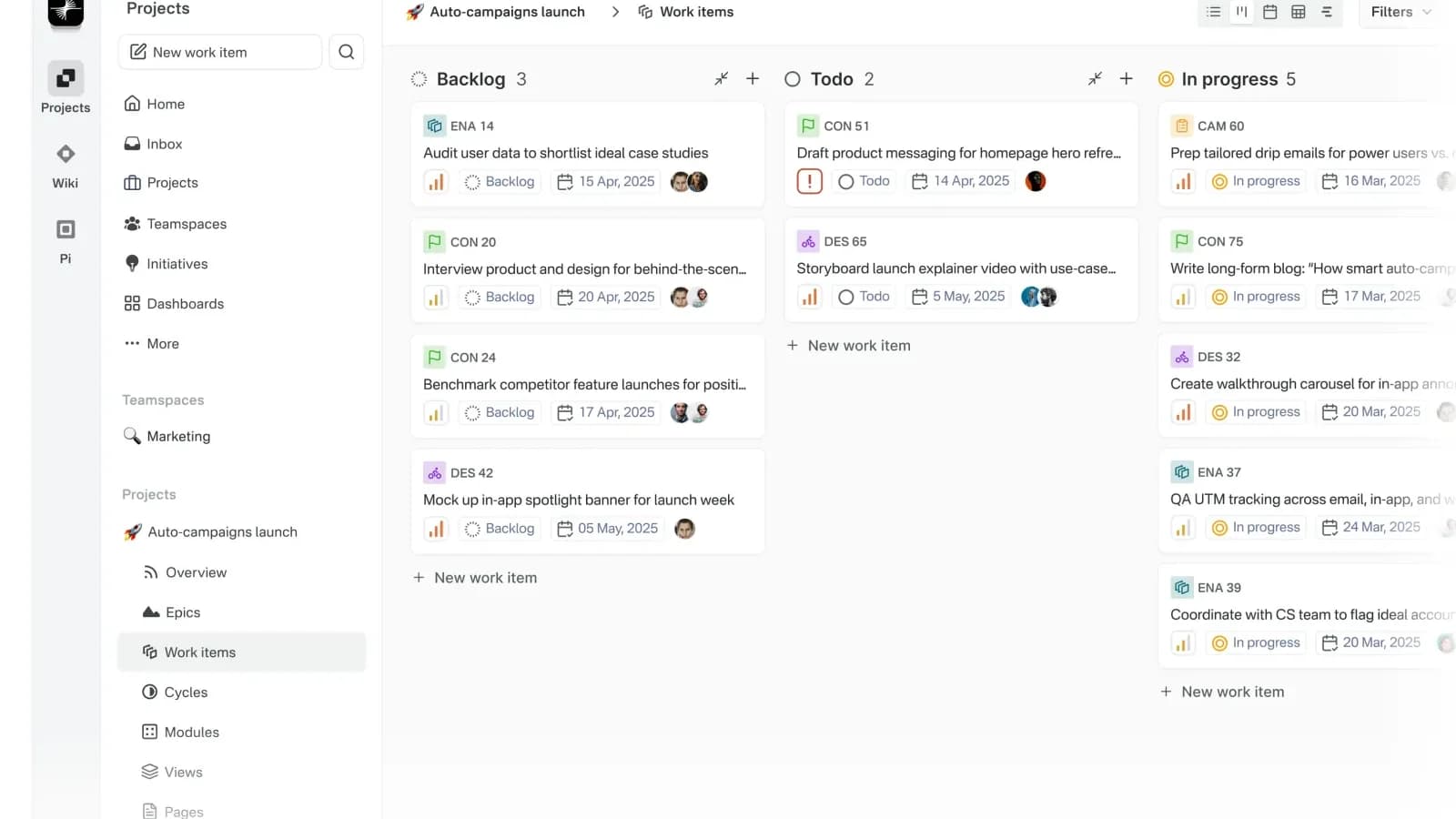
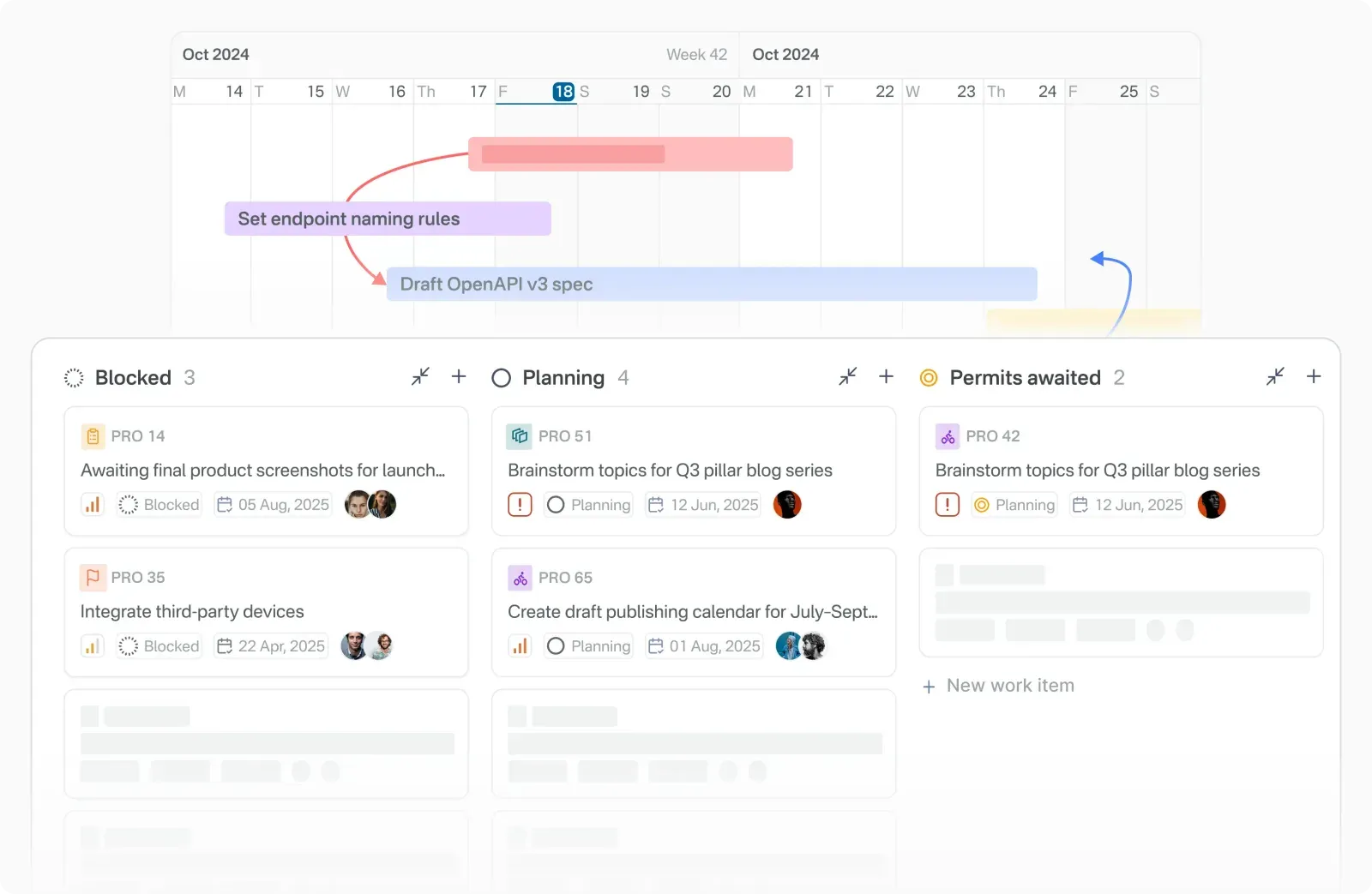
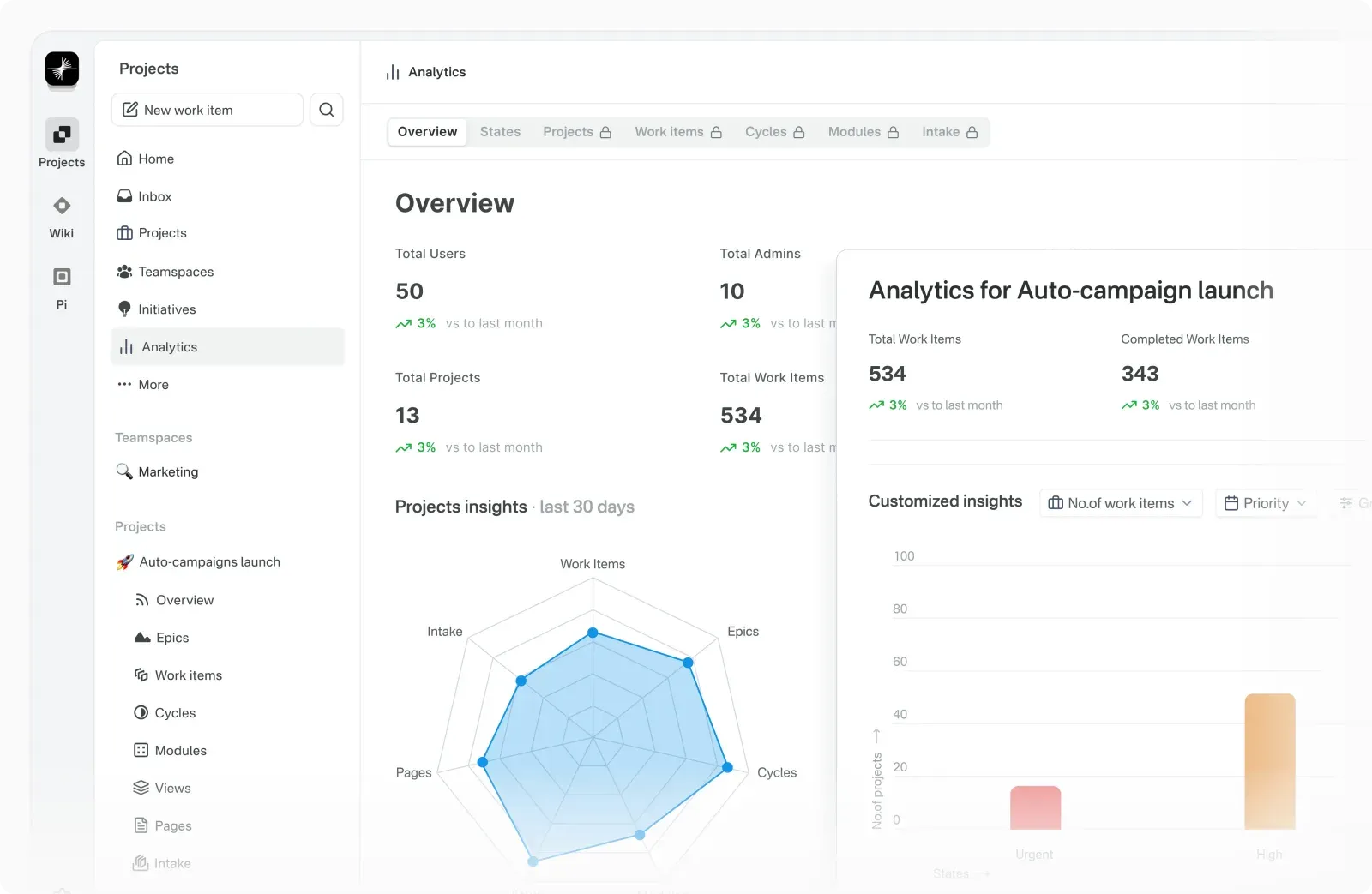
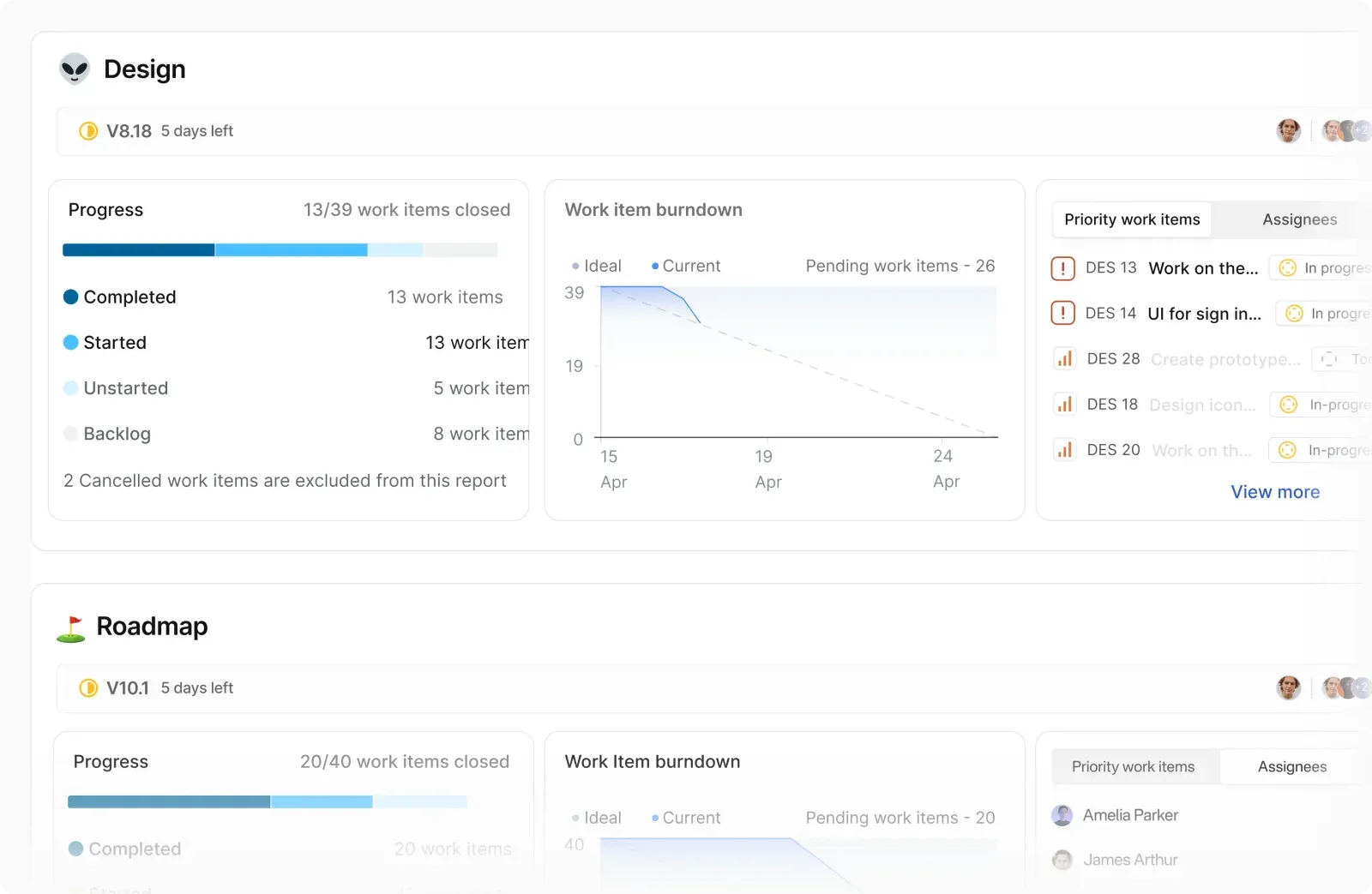
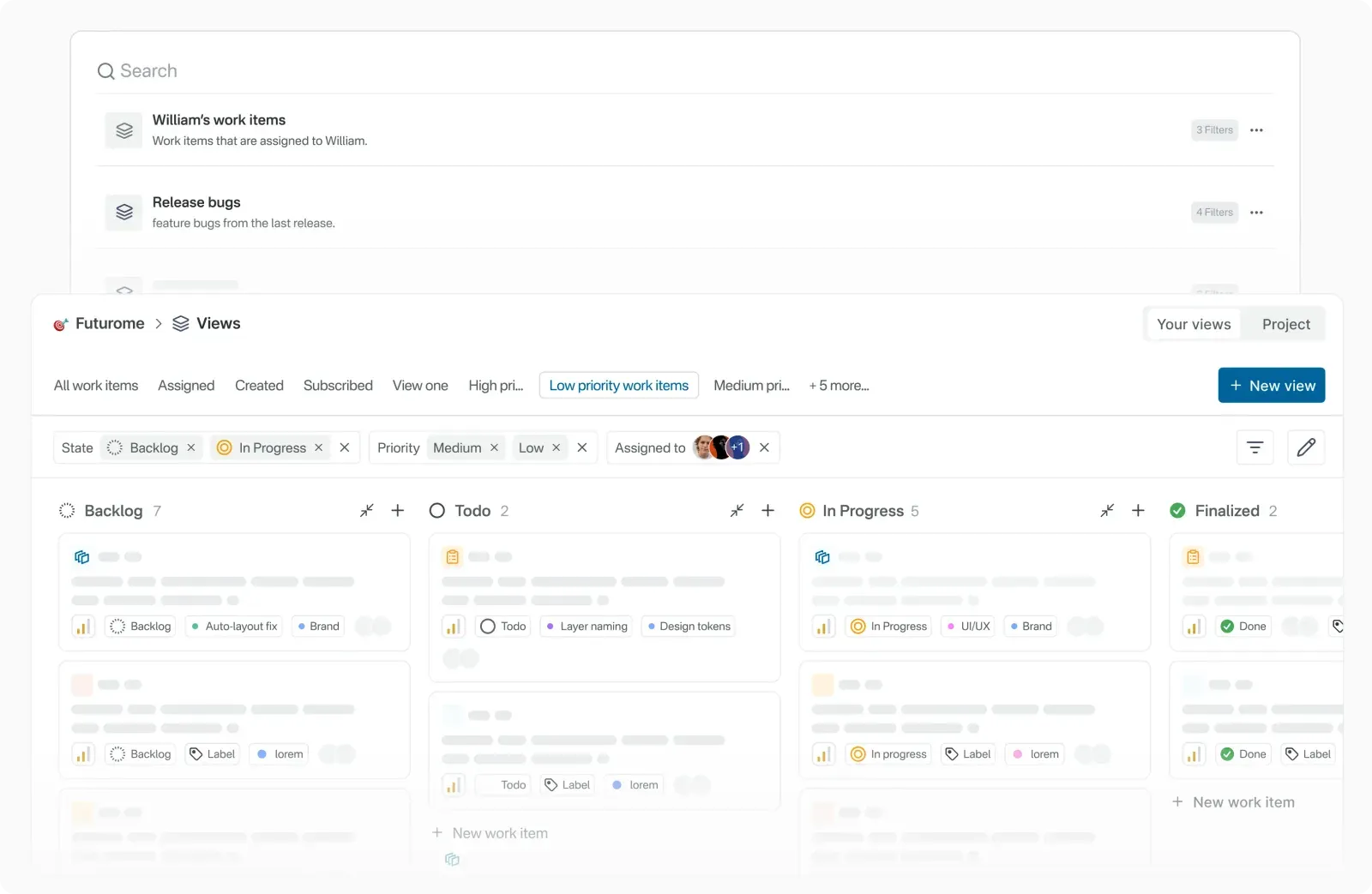
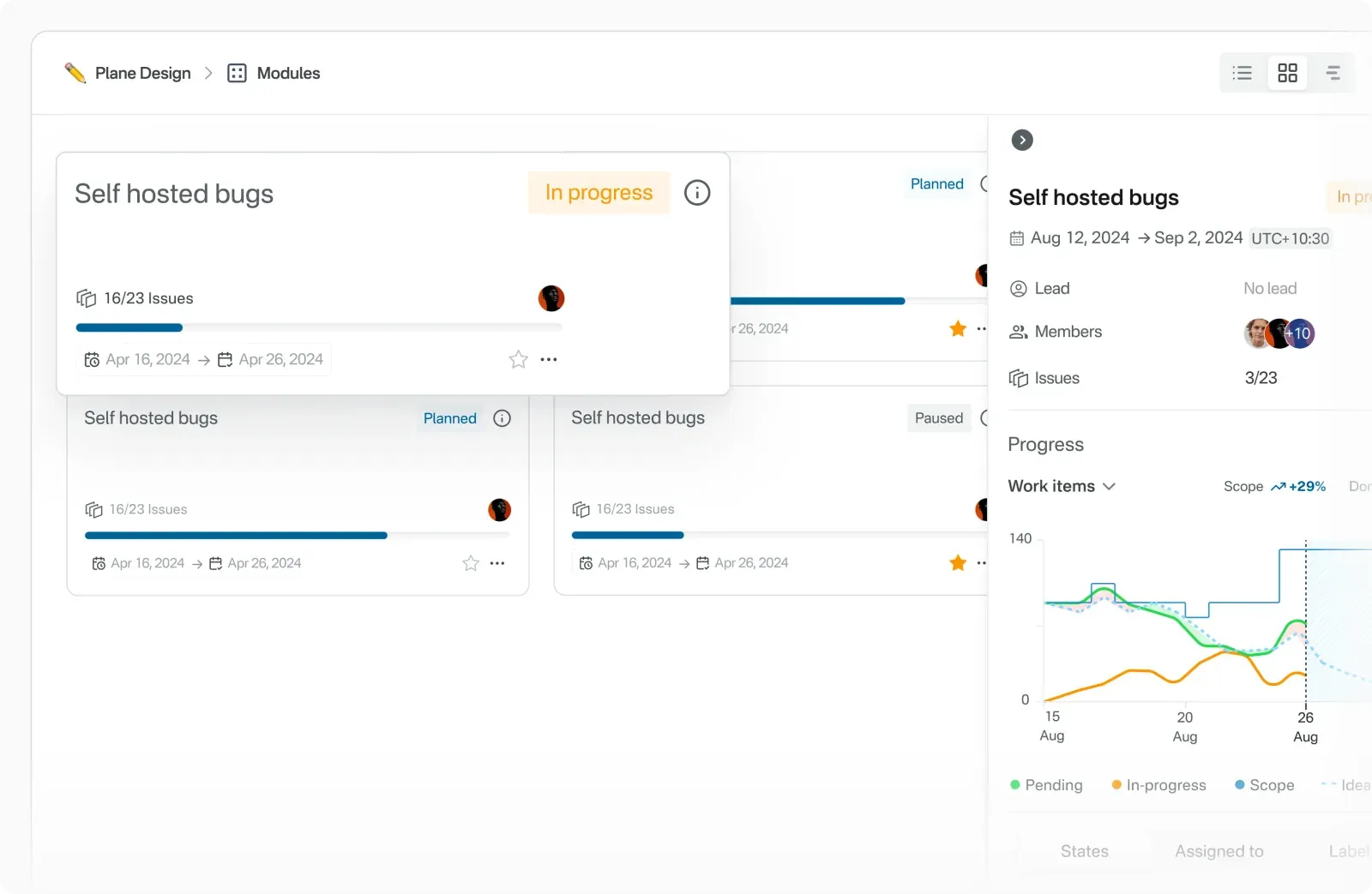
Plane covers what you expect of a project management tool out of the box: work items with states and priorities, boards, cycles, modules, filtered views, a timeline with dependencies, and workspace analytics. That part was already there, and it is good.
The screenshots on this page are of Plane Community Edition, as published by the upstream project at makeplane/plane. Our own instance is not public and the fork is for internal use: we do not distribute it.
The twenty-seven features we added
All of them ours, all of them in the instance we use every day.
Time
- Logging hours — Log time against any work item, in the units people actually type.
- My timesheet — Your own hours over a date range, totalled by project and by day.
- Estimated against logged — An estimate in hours on a work item, next to what has actually been logged.
- How long, as you type — Say how long a work item should take while you are adding it, not afterwards.
- Time-tracking reports — Any slice of everyone's hours: saved, shared and exported.
- Dashboards — A page of the numbers you keep asking for, pinned so you stop rebuilding the report.
Planning
- Releases — Group work into a version, give it a date, and see how close it is to going out.
- Epics as summary tasks — An epic's dates and totals come from the work inside it, so they cannot be wrong.
- The epic on every row — See which epic a work item belongs to without grouping by epic.
- A sprint's size in hours — What a cycle is estimated at, and what has been logged against it.
- Recurring work items — Work that repeats makes itself, so nobody has to remember to.
- Due date reminders — An email before something you are assigned falls due, and one when it slips.
- Save view — Keep a view the way you set it up, not just the name you gave it.
The shape of the work
- Work item types — Task, epic, and any other type a project needs — filterable, and normalised across projects.
- Custom fields per type — Fields that belong to a type, not to every work item in the project.
- Branches, commits and pull requests — See the code behind a work item without leaving it.
Support
- Service desk — Turn a project into a support desk with a public form people can write to.
- Agents and the shared queue — One list of every request across every desk you answer for.
- Asking a desk for something — The other side of the counter, for people who work here.
- Response targets — Say how fast you mean to reply and to resolve, and see when that is slipping.
- SLA monitor — Whether the desk is actually keeping its promises, month by month.
Automation
- Custom automations — When this happens, if these hold, do these things — written once and run for you.
Administration
- Import from Jira — Bring a Jira project across — work items, comments, hours and all.
- User management — Everybody in the workspace, and the roles Plane does not have.
- The project manager role — Authority over other people's hours, without changing anything else.
- Last login and last seen — Whether an account is being used at all, in the list of members.
Around the app
- What's new — A dated list of everything added, with a dot on the help icon when there is something to read.
How it is built
It is a fork of Plane Community Edition v1.4.2, and it is built to keep taking upstream releases. Our code lives in directories Plane does not have and reaches the product through declared seams: only sixty-eight of their files are touched, each with the reason written down. Everything else is a hundred and twenty-seven commits of ours that conflict with nothing when a new release lands.
The backend is eighteen modules of our own on Django, with over a thousand automated tests run before every image. Internal releases run from omitsis.1 to omitsis.77, each deployed as its own image, and the app carries its release journal inside so the team can see what changed without asking.
What came of it
Jira is gone. The work, the history, the hours and the support all live in a tool that is ours, running on a server of ours, that charges nothing per person: the cost is the machine and the development time, and the second has been a fraction of what it would have been without AI.
It is the case we like to point at when somebody asks whether open source and AI are serious enough to carry a real internal tool. This one is, and we use it every day.